The Eleven Continents of Hiraeth: A World Etched in Magik and Memory
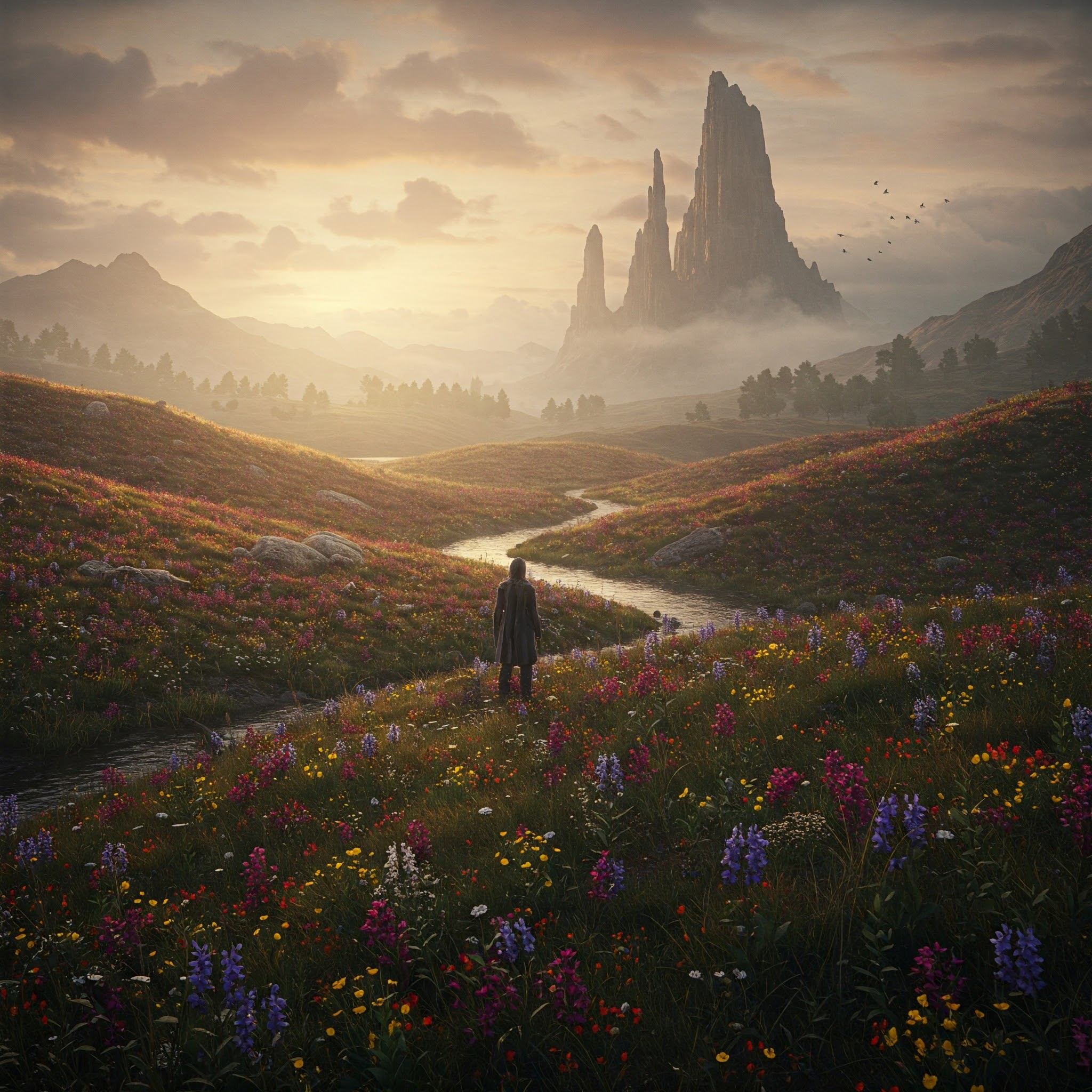
The 11 Continents of Hiraeth
Hiraeth is a realm shaped by primal forces and buried memories. Its eleven continents stretch across a world that has survived the Sundering, endured the rise and fall of empires, and now teeters on the edge of another transformation. As you explore the House of Teeth saga, understanding these lands will deepen your immersion and possibly help you discover where your Hiraeth self belongs. Below, we journey continent by continent, unraveling their legacies.
1. Scrila — Land of Ash and Stone
Scrila stands as the harsh and jagged heart of the House of Teeth Saga, a continent locked in an elemental duel between fire and ice. This land is never quiet—never still. Snowfall cloaks the gothic towers of cities like Glacivryn nearly 80% of the year, layering soot-stained stone and magitech pylons with relentless frost. Yet even in this chill, volcanic fury pulses beneath the earth. Massive peaks like Mount Rhaskorr rumble with latent energy, remnants of a cataclysmic eruption that once smothered the land in ash and shadow for over a decade.
Scrila is a place of duality, where faith and fear walk hand-in-hand. The Pyrestalker Shifters who rule its highlands believe the volcanoes are living deities—sentient forces of judgment and rebirth. Rituals are performed on lava-blasted cliffs, and warriors wear obsidian charms to mark their favor with the fire gods. Meanwhile, the east is home to whisper-bound glaciers said to conceal the resting place of a "sleeping god," protected by time-worn wards and ancestral frostbound guardians.
Beneath the surface, history lives in stone and rune. Archaeologists and rogue elves scour Scrila’s broken valleys and frozen plateaus for ruins of pre-Sundering civilizations, drawn by the hum of dormant Shadow Weaving and buried Anima surges. The city of Glacivryn itself is a patchwork of innovation and reverence, where inventors use rare minerals exposed by lavaflows to craft relic-grade magitech. Flickering glyphs light the streets, and steam coils from gearwork towers long after dusk falls.
But Scrila is not only a land of wonders—it is a forge. A place where those who survive are reshaped, often against their will. The very environment demands transformation. Those who live here grow hard-edged and weather-worn. Magic here feels heavier, older, and deeply bound to consequence.
Whether you’re a frostblooded native, a wanderer seeking purpose, or a reluctant heir to a bloodline drenched in prophecy, Scrila will carve you into something new. It does not grant peace—only clarity, and the strength to endure what the Veil dares to reveal next.
2. Erinth — The Wild Heart
Erinth is a towering labyrinth of green, where trees stretch higher than temples and the wind carries ancient hymns. It's the oldest living forest in Hiraeth, believed to have roots that predate the Sundering itself. The Sylvari Elves call this land home—guardians of the canopy, keepers of druidic wisdom, and speakers of the Veil’s most secretive murmurs. Their cities are woven into branches, hidden by Veil-bent illusions and draped in soft bioluminescence.
The land itself pulses with magic—wild, unpredictable, and sacred. Plants like Razorvine and Shadowblossom bloom with Anima, capable of both healing and harm. Creatures born here often straddle the line between beast and spirit, none more feared than the Thunderwolf—an apex predator whose cry can split stone and stir the forest into frenzy.
To walk through Erinth is to enter a dream. Mist curls around your feet, and paths shift like memory. Many believe the leyline convergence points scattered across the southern tundras are ancient altars that track Hiraeth’s moons and influence the tides of magic. Druidic orders fiercely protect these stone circles, claiming they are “pulsepoints” where the Veil becomes transparent.
Erinth is not without danger, nor is it without tragedy. The forest has devoured empires and repelled invaders, and it still bears the scars of magical battles that tore holes into the Veil. But for those attuned to its rhythm, it is a sanctuary—a place to become something greater, or be humbled by something older.
3. Fennora — The Broken Land
Fennora is a continent of scars—deep chasms carved by war, magic, and the Sundering itself. Its landscapes are jagged and unpredictable, dominated by towering cliffs and abyssal valleys where sunlight rarely touches the ground. The people here are pragmatic, loyal, and shaped by centuries of siege and survival. Kingdoms cling to cliff-fortresses, where every bridge and battlement tells a story of defense and sacrifice.
Nomadic Veil Kitsune roam the canyons and plateaus, wielding the uncanny ability to walk between worlds. Elusive and enigmatic, these Elves serve as Veil-watchers and truthkeepers, slipping through rifts with grace and leaving behind warnings scrawled in dream-dust. Fennora’s people speak softly and carry blades—they know the Veil can tear open beneath your feet without notice.
Below the surface, glowing ore veins pulse with latent Anima. These minerals are prized and fought over by rival factions, and many suspect the veins form patterns—maps, perhaps, or circuitry laid by forgotten architects. Scholars, mercenaries, and war mages flock to the edges of these contested zones, hoping to uncover secrets hidden in stone.
Fennora does not offer easy answers. It demands patience, vigilance, and the ability to thrive in tension. For those who call it home, trust is earned in the silence between battles, and honor is something forged in hardship—not claimed with ease.
4. Anseyn — The Eternal Crossroads
Anseyn is a living convergence—a land where the disparate threads of Hiraeth’s cultures, races, and ambitions are stitched together in brilliant tension. It is the most diverse of the continents, and at its heart lies Cascadia, the spired jewel of the world and home to the Aetherwind Institute of Magik. Here, learning is law, and the boundaries between theory and application blur daily. The streets are alive with magik-tech hybrids, enchanted railways, and scholars debating the morality of memory-splicing spells over their morning coffee.
Geographically, Anseyn is a marvel. Forests rise next to crystal deserts, and tundra tongues reach into sun-drenched canyons. This blend of terrains reflects its sociopolitical complexity—republics, monarchies, anarchist enclaves, and trade city-states all exist side by side. Cascadia is known as the cradle of new-age Magik theory and Veil manipulation, and many believe that if the world is to be broken or saved again, the first spark will flare here.
Anseyn is not without its darkness. The more the Veil is studied, the more fragile it becomes in places. Hidden beneath the ivory towers are cracks—real and metaphorical—that may one day swallow more than secrets. Still, to belong to Anseyn is to live on the edge of discovery, where ambition isn’t just encouraged—it’s worshipped.
5. Hicine — The Icy Wastes
Hicine is silence, and the endurance it takes to survive it. The entire continent is coated in ice and wrapped in twilight, its horizon marked by jagged peaks and glowing cave networks that pulse with bioluminescence. The capital, Nyseron, is less a city than a beacon—anchored in frost and connected by tunnels carved by ancient frostwyrms.
The Shifters of Hicine are predators sculpted by desperation. Snow leopards, dire bears, white ravens—they traverse the tundra with wary precision, never wasting energy, never misstepping. Every step in Hicine counts, for beneath the ice sleeps Atah’Zul, the rumored city of glass, sorrow, and defiance. Scholars dream of it in flashes: vaulted ceilings lit by auroras, people frozen mid-motion, eyes open as if watching something even now.
But Hicine is not just a tomb. Its people are innovators. Anima-powered icebreakers sail the frozen coasts, hunting for sunken knowledge beneath the floes. Sedai engineers here are masters of cold-forged magitech, their tools designed to channel warmth and memory alike. They do not flourish despite the cold—they flourish because of it.
Hicine is a place that asks what you're willing to freeze in order to preserve what matters. Those who thrive here carry a stillness in their bones—a wisdom carved by frost and honed by isolation.
6. Vyncis — The Frosted Plains
Vyncis stretches wide and flat, a tundra realm where frost never thaws and silence reigns like a deity. The wind here howls with purpose, scattering snow across the domes and towers of Straka, its capital—a marvel of Aes Sedai resilience and magitech innovation. Life clings to heat domes powered by Anima cores and reinforced greenhouses pulsing with bioluminescence, proof that even the most barren landscape can bloom with enough ingenuity.
Beneath the thick permafrost lies something stranger still: crystalline veins of Anima in geometries too perfect to be natural. Scholars from Cascadia call it the Nervous Net—a kind of planetary neural network that pulses faintly with a will of its own. Dreamwalkers who rest near the oldest veins speak of visions—sometimes prophetic, sometimes maddening. Some hear voices from beneath the ice; others wake weeping, their dreams heavy with starlight.
In Vyncis, the cold doesn't break you. It reveals what you're made of. Every invention forged here is a rebellion against extinction, and every Aes Sedai who thrives in the frost is a testament to survival, evolution, and grace under pressure. The future of Hiraeth may lie in its thinkers—and many believe Vyncis will be where the next great shift begins.
7. Istulyin — Land of Fog and Flame
Istulyin is haunted in every sense of the word. Fog clings to its surface like memory, dense and hungry. To walk its swamps is to hear whispers with no mouth, to see figures in the mist that vanish when you blink. Ephida, the capital, is a place of flame and ritual, suspended on platforms above magma streams and smoldering ruins. Everything here feels a breath away from collapse—or transcendence.
The northern boglands house the infamous Bogborn cult, whose worship of the Mother—a once-human spirit fused to a cursed tree—has twisted life, death, and decay into one sacred spiral. Roots writhe beneath the soil, and offerings vanish without a trace. Southward, sinkholes hiss secrets and ghost-thickets drift like slow-moving predators, shifting their roots when unobserved.
Then there are the Fallen—the Empyrean cast from Elysia and shorn of their wings. They wander Istulyin’s highlands like myth given flesh, eternally veiled, eternally burning from within. Some offer cryptic counsel. Others kill without speaking.
Istulyin is a place of reckoning. It does not allow you to lie to yourself. Those who survive its trials return changed—wiser, yes, but also marked. The Veil is thinner here, and sometimes, if you listen closely, you can hear the world whisper back.
8. Aleda — The Fiery Highlands
Aleda is a continent sculpted by wrath and revelation. Magma flows like blood through its valleys, and the sky itself often weeps ash and fire. This is a land where nature doesn't just dominate—it declares. At the core of Aleda’s mythos burns Mount Solharis, the massive supervolcano whose constant, thunderous growl is said to be the voice of the Skyfather—a forgotten god whose tears crystallized into Anima-rich veins.
The Fang family rules from Titesway, their obsidian-boned estate carved into the volcano’s side, watching the land pulse with divine fury. Nobles here view survival as proof of worthiness. Empyrean warrior-clerics walk the flame-slick paths barefoot, guided by ancestral hymns and volcanic tremors. It is a place of devotion and destruction, where prophecies are pulled from molten rivers and fire spirits are petitioned like demigods.
Even the flora and fauna of Aleda are forged in extremes. Fireroot trees bloom from cooled lava. Scorchscale serpents coil through vents, their breath igniting in open air. And yet, beneath the chaos lies delicate balance. The people of Aleda do not just survive—they interpret, translate, and revere their land's volatility.
To live here is to accept change as sacred truth. Here, the fire is not your enemy. It is your teacher. And those who learn its lessons walk forward unafraid, reborn in heat and ash.
9. Uclalari — The Verdant Expanse
Uclalari is the breath between battles—a continent of fertile wealth, seasonal reverence, and understated power. Golden wheat ripples in hypnotic waves beneath gentle skies, while citrus-rich deltas feed bustling markets under painted canopies. It is Hiraeth’s agricultural heart, yet beneath its easeful exterior runs a network of ancient rites and ancestral magic that even the soil remembers.
Icario, the capital, is a city of water wheels, floating orchards, and prayer gardens built atop leyline nodes. Here, agrarian guilds oversee the cultivation of Evergrain—a mystical crop believed to be blessed by the Veil itself. One seed can nourish a person for days, and the secrets of its growth are protected like sacred scripture.
Uclalari’s southern peninsula pulses with pre-Sundering tradition. The Azatlir bloodlines still practice ancient rites—part harvest, part sacrifice, all bound to a cyclical magik that respects both life and decay. Old songs are etched into vineyard walls, and golem-sentinels stand silent in forgotten fields, awakening only during planetary convergences to recalibrate the balance of growth.
This land does not boast. It endures. It whispers its lessons in the rustling of vines and the rhythm of planting seasons. Uclalari is a hymn in green and gold—an invitation to those who understand that power can root quietly, bloom with purpose, and still break the world open.
10. Odmor — Storm-Battered Shores
Odmor is a continent shaped by the ocean’s wrath and the stubborn resilience of its people. It is where land and sea blur into an eternal contest of will—raging monsoons lash the coastlines, skyfire splits the clouds without warning, and the ground itself heaves under the fury of ancient, restless spirits. Amid this tempest, the city of Rokati stands defiant: a coral-and-steel citadel carved into cliffs that have withstood the sea’s rage for centuries.
Rokati is more than Hiraeth’s largest port—it is the continent’s heart, a place where trade, piracy, and prophecy converge. Fisherfolk and merchants share the docks with stormcallers and wandering priests, all of whom believe the wind carries omens if you know how to listen. The capital, Kraisa, rises like a lightning rod into the clouds, its spires humming with residual Anima and weather-bending enchantments.
Shifters in Odmor take aquatic or stormborne forms—sea serpents, electric eels, storm eagles—each a response to the land’s relentless challenges. Legends speak of old gods drowned during the Sundering, whose bones now churn beneath the tides, their fury guiding the lightning and waves. Ritual offerings are still cast into whirlpools, and sometimes the sea returns them altered, or not at all.
Odmor is for the adaptable. For those who see unpredictability not as chaos, but as rhythm. For those who thrive in stormlight and salt, where survival demands wit, flexibility, and the strength to rebuild after each wave.
11. Pherel — The Green Abyss
Pherel is not a jungle. It is a living organism. A continent of breath and hunger and bloom, where the canopy eclipses the sun and the soil remembers blood. Vines strangle ruins swallowed whole, and trees whisper to each other in winds scented with spice and decay. Izanbu, the capital, is carved into the bones of a long-dead Kaiju, its skull now an open-air temple where descendants gather to honor ancestry and silence.
Kaiju who make their homes here often see the land as a sacred inheritance—equal parts tomb and cradle. Their ancestors fell here, were buried here, and now nurture the roots that shelter their progeny. Galos, the jungle refuge city, is a mosaic of skull temples, bioluminescent walkways, and vine-choked sanctuaries. The jungle reclaims everything in time.
The deeper one ventures, the more surreal it becomes. Crimson Creepers that drink Anima from the air. Bonebiter Boars that feast on magical creatures. And always, the pulse beneath it all—a heartbeat of something ancient that sleeps far beneath the canopy, watching.
Pherel is sacred and hostile. It does not offer kindness, only growth. If you come with respect, it may allow you to walk its roots. If you come to conquer, it will consume you—one bloom, one breath at a time.
Which of these lands whispers to your soul?
[ Click here to view the moodboards and let your instincts guide you ]


Comments
Post a Comment